
Case Studies

What the six weeks actually builds

Three realistic paths through the course, each starting from a different point. They show the shape of the work, not a promise of the result.

How these are grounded. These are illustrative composite journeys, not real named students. Each is built from the actual weekly curriculum and sourced market research, not invented figures. Evolving Lane doesn't publish fabricated testimonials or income claims. When the founding cohort produces documented, consented results, real case studies will replace these.
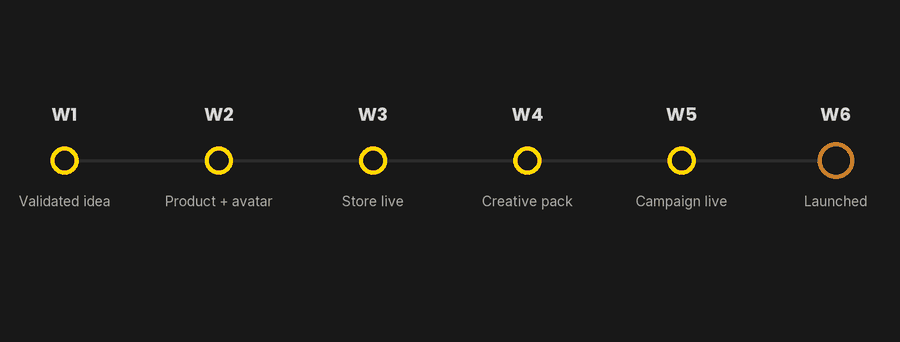
The same six-week spine for every path: validated idea, product and avatar, store live, creative pack, campaign live, launched

The same six-week spine. Three different starting points below.

Flat illustration of a small shopfront with a striped awning

Case study 01 · Physical products · Illustrative

Marcus — The side-hustler with a full-time job

Full-time job in logistics, six hours a week in the evenings, no e-commerce or marketing experience. Plenty of free YouTube watched, no system to show for it.

The path

Week 1

Validated niche

His first idea, generic phone accessories, failed the course's product test: too crowded, no angle, thin margins after ads. He pivoted to a specific buyer with a real problem, ergonomic grip tools for gardeners with arthritis, before spending a penny.

Week 2

Sourced product and offer

A real supplier shortlist and a one-page customer profile built from mined reviews, so the copy could speak to an actual person rather than 'everyone'.

Week 3

Live store

A professional Shopify store, payments connected, GDPR and returns pages generated and published. Live by the end of week three.

Week 4

Creative pack

Product photos with no camera, static and video ads, and a bank of copy, all AI-generated, then edited to convert.

Week 5

First campaign

A Meta campaign at £12 a day, a figure he set from his own unit economics, plus three core email flows including abandoned-cart recovery.

Week 6

Launched

Store live, AI handling first-line support, and a weekly report landing in his inbox automatically.

Illustration of an open parcel box with a price tag and checklistWeek 2 — sourced product and offer, illustrated.
Outcome

First paid orders in the launch fortnight, a modest start in the low double digits in this illustration, and a blended cost-per-sale on the best-performing ad that sat under his contribution margin. Against the course's day-30/60/90 benchmarks, that's a clear signal to keep going, which is the only decision that matters at this stage.

What they walk away with

A store that runs, operations on autopilot, and a reusable prompt library. Product two will take days rather than weeks, because the system already knows the business.

Why this over a faster course

The build was never the hard part, the sales system was. A speed-course would have left him live and invisible on a niche that couldn't pay.


Flat illustration of a tablet displaying a document, with a pencil

Case study 02 · Digital products · Illustrative

Priya — The freelancer productising her skill

Freelance brand designer, steady clients, income capped by the hours in a day. No productised offer of her own, and no stock or shipping to worry about once she picked the digital path.

The path

Week 1

Validated niche

A specific buyer identified: small-business owners who need brand basics but can't afford a designer.

Week 2

Built the product

A 'Brand-in-a-Box' of editable templates plus a short setup guide, using the course's digital-product workflow and its decision matrix to confirm digital was the right lane rather than guessing.

Week 3

Live store, instant delivery

Shopify set up for automatic digital delivery, with payments and legal pages done.

Week 4

Creative pack and copy

Generated fast in her own voice, then edited to convert.

Week 5

Organic pipeline and email flows

A short-form content pipeline plus a small paid test she could switch off at any time.

Week 6

Launched

Support and reporting automated from day one.

Illustration of envelopes connected by a dotted flow with a heart iconWeek 5 — organic pipeline and email flows, illustrated.
Outcome

First digital sales landed during launch week, each at almost no marginal cost since there's nothing to make or post after the file exists, including sales that came in while she was asleep or with clients. A small first run of orders in this illustration; the point is the shape of it, not the size.

What they walk away with

A second income stream stacked on top of freelancing that doesn't cost more hours. Product two, a mini-course built on the same customer profile and copy bank, will be far quicker to launch than the first.

Why this over a faster course

Most e-commerce courses treat digital products as an afterthought, if they mention them at all. Here it's taught in full, with a framework to choose it deliberately, often the highest-margin route in for a skilled freelancer.

Illustration of a rocket launching out of an open box

Case study 03 · The turnaround · Illustrative

Dan and Leah — The offline business going online

Ceramics makers selling at weekend markets. They'd already bought a cheap 'build your store in an hour with AI' course and got exactly what it promised: a store, and no online orders. The product and store shell already existed; what was missing was everything the money depends on, traffic, conversion and operations.

The path

Week 4

Rebuilt creative pack

Proper product visuals, static and video ads, and product-page copy written to sell rather than describe.

Week 5

First real campaign

An abandoned-cart flow to recover customers who used to vanish at checkout, plus email capture so traffic stopped leaking away.

Week 6

Launched properly

Weekly reporting automated so they can see what's working without living in a dashboard.

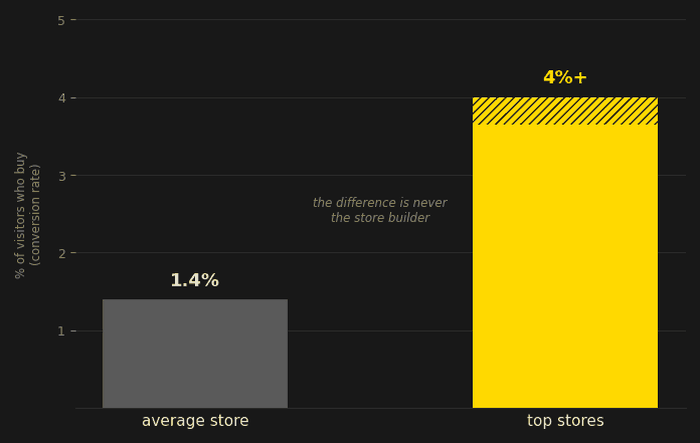
OutcomeBar chart comparing conversion rate: average store 1.4 percent versus top stores 4 percent or more

Their conversion rate had been sitting around 1%, against a market benchmark where the average online store converts roughly 1.4% and the best convert over 4%, with about 70% of carts abandoned (July 2026 research). In this illustration, fixing the product pages, the cart-recovery flow and the traffic source moves their conversion rate up toward that 2-4% range, and the market stall stops being their only channel. Not overnight, and not magic, just the specific gap the speed-course skipped, closed.

What they walk away with

An online channel that runs alongside the market stall, automated reporting, and honest maths to decide which products deserve the ad budget.

Why this over a faster course

They'd already paid for the store shell. This is the course that made the store sell, which is the whole premise: it starts where the others stop.

See the six-week path in full

The case studies above are the shape of it. The course page has the week-by-week curriculum, the pricing, and the honest benchmarks behind every claim on this page.

Case Studies | Evolving Lane